
Describe the covering, adhesive and subfloor separately
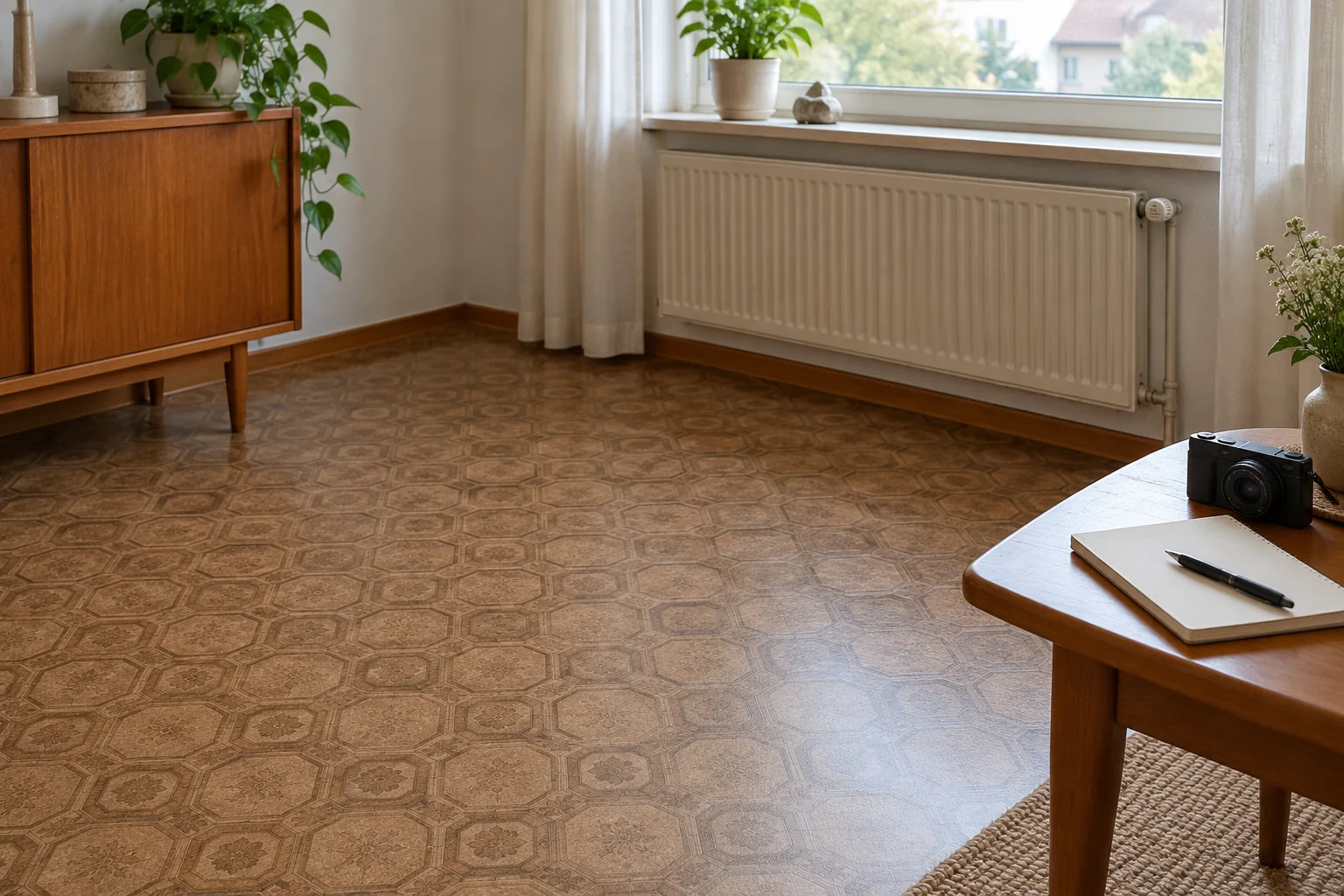
An enquiry to ‘remove the carpet’ leaves open what lies underneath and how much work is required. Describe the visible covering. Only list the adhesive, levelling compound or earlier coverings as known if records or previous professional findings support that description. Mark everything else as unconfirmed. A newer carpet does not establish what older layers contain.
The German Environment Agency lists old flooring and adhesives among possible asbestos applications. Colour, texture or a photograph cannot reliably establish asbestos content. Do not open the floor build-up yourself just to obtain better pictures or describe the materials.
Make an inventory using information you already have
Assign each detail to a room and an area. Use invoices, product documents, plans and existing reports. Photographs can record the accessible condition without lifting, breaking or scraping anything. If information is missing, write ‘unknown’ rather than guessing.
| Detail | What to collect | Possible source | Question for the specialist |
|---|---|---|---|
| Location and scope | Room, area and planned work | Floor plan and work description | Which areas will actually be affected? |
| Building and alterations | Construction year, start date and known renovations | Building records, owner’s documents, invoices | Which dates are still missing? |
| Visible covering | Known product and installation date | Invoice, product sheet, existing photographs | Do the records clearly relate to this room? |
| Underlying layers | Only previously documented adhesives and floor layers | Earlier plans or investigations | Which layers remain unconfirmed? |
| Existing findings | Complete report with sample locations | Laboratory report or hazardous-material survey | Does the report cover the planned work? |
| Condition and previous work | Damage or openings already known about | Existing records and observations without disturbing materials | Should affected work remain on hold? |
Share building records and agree on the investigation
Section 5a GefStoffV requires existing hazardous-material information in writing or electronically before work, including private commissions. For construction years 1993–1996, provide the construction start date, or the year if unknown; outside that range, the year suffices.
Under section 6 GefStoffV, the employer carrying out the work must evaluate the information for its risk assessment. Any necessary technical investigation must precede the affected work; outside expertise is required where the employer lacks it.
Agree early who will review existing reports, commission any additional investigation and coordinate its costs and results. Ask which information is missing for your particular floor build-up. A general statement about the whole home is of little help if the report concerns a different room.
Stop affected work when a suspected hazard remains unresolved
If an unknown, suspicious layer appears during preparation or work, pause the activities that would disturb it and inform the responsible contractor. Do not disturb the material further, and keep other people away from the work area. Have a qualified specialist determine the next steps before anyone continues.
Do not break off samples, grind adhesive or collect dust with a household vacuum cleaner. Covering the finding with new flooring does not resolve the uncertainty. These points explain when to stop and seek assessment; they are not instructions for remediation or cleaning.
Relate findings to specific rooms, layers and planned work
Commission any necessary investigation, including sampling, from a suitably qualified organisation. Ask for clear identification of the places and materials investigated. Establish whether the covering, backing, adhesive and any other affected layers are included or whether information is still missing.
Do not independently apply one sample result to every room and layer. Have the findings assessed for the agreed removal work and ask about their limits. If asbestos is found, the contractor, procedure and required evidence must suit the specific activity; Darmstadt Regional Council refers to qualified specialist firms and the applicable rules.
Plan waste disposal before removal
Agree beforehand who will classify the waste, arrange the required preparation, transport it and organise disposal. Darmstadt Regional Council identifies asbestos-containing waste as hazardous waste. Unresolved suspicious materials should therefore not be included in an ordinary rubble collection without professional classification.
Ask which receiving facility is planned, which costs are included and which records you will receive for the agreed disposal. Do not arrange your own collection or delivery of suspicious remnants before the responsible specialist contractor has clarified the procedure.
Separate investigation, removal and new flooring in the quote
Request a clear description of the work. Record unresolved conditions before agreeing to a firm removal date and the subsequent flooring work.
- Which investigation and assessment are included, and who commissions them?
- Which rooms, areas and layers does the confirmed removal cover?
- Which qualifications and, where applicable, regulatory prerequisites must the contractor demonstrate?
- Who handles the necessary protective measures, cleaning, transport and disposal?
- In what agreed condition will the area be handed over to the flooring installer?
- How will further findings, changes in scope, costs and dates be agreed before work resumes?
Submit an enquiry with known details and open questions
State the location, rooms, approximate area, known building details and intended scope. Explicitly identify unknown layers and mention any existing reports. Have these documents ready for discussion with the specialist contractor. A photographic description is not clearance to work on a material.
HandMen provides online marketing and enquiry referrals. We do not inspect materials, take samples, remove flooring or handle disposal. Before forwarding personal data, we identify the independent partner and obtain your separate consent. Assessment, quotation, contract, work, invoice and payment are agreed directly with the appropriately qualified company; a HandMen enquiry confirms neither material suitability nor permission to begin work.